

GOOD USE OF A DOG KENNEL
A dog kennel is a building that keeps your pet inside and gives them a safe, private place to stay. Below are some reasons you should buy a well-built dog kennel for your home.
 A Kennel Provides Dogs with Protection
Kennels are made to give your dog a safe place to stay. Cages are safe places for pets to be outside because they keep them from running away and getting into trouble. They also let pets get lots of fresh air and sun. Your dog won’t be able to bother other dogs or get into fights with other dogs, either. It’s essential to have a kennel for your dog if you want them to be safe outside. Dog kennels are another option that might cost less than dog gates.

Importance of Using a Dog Kennel as a Refuge for Dogs
Providing protection: Kennels offer shelter for dogs, ensuring they are safe from various hazards and preventing them from running away or getting into trouble.
Making travel safer: Kennels can make traveling with dogs less stressful by providing a familiar and comfortable environment.
Encouraging exercise: Kennels can give dogs a space to play and exercise, especially when they seem restless or listless.
Cost-effective alternative: Kennels can be a more affordable option compared to dog fences, providing a secure space for dogs to enjoy the outdoors safely.
Tips for Using a Dog Kennel Effectively
Proper Setup and Placement of the Kennel
The setup and placement of a dog kennel are crucial for the comfort and well-being of your pet. The kennel should be placed in a quiet corner of your bedroom or living room, where the dog can feel included in the family’s activities. Don’t put the kennel next to air vents, near heat sources like fires, or under windows to keep the dog from being uncomfortable when the temperature changes.
The size of the kennel should be appropriate for your dog. It should be large enough for your dog to stand up, turn around, and stretch comfortably. However, it should be manageable as the extra space may encourage the dog to do their business inside the kennel.
Creating a Comfortable and Inviting Environment
To ensure your dog feels safer and more secure, you need to ensure the kennel is an excellent and welcoming place. This can be achieved by adding a cozy dog bed or a specially designed orthopedic dog crate pad for comfort. You can also include your dog’s favorite toys to make the kennel feel like home.
Controlling the temperature is another essential thing to think about.
Avoid placing the kennel in direct sunlight or close to a heat source. In warmer months, or if you have a heavy-coated animal, a crate fan can be an excellent option to provide good ventilation.
Establishing a Routine for Kennel Use
Establishing a routine for kennel use can help your dog adjust to spending time in the kennel. This routine should be consistent and consider the dog’s feeding times, playtimes, and rest times. Regularly cleaning the kennel can also create a pleasant environment and reduce the risk of infections.
Monitoring and Adjusting Kennel Time Based on Dog’s Behavior and Needs
You should monitor your dog’s behavior and change their kennel time based on their needs. If your dog seems upset or uncomfortable in the kennel, you may need to shorten the time it stays there or change its surroundings. Remember that every dog may need a different way to use a kennel.
Kennel Training for Dogs
Kennel training is an essential aspect of dog ownership that can significantly benefit both the pet and the owner. It involves teaching the dog to see the kennel as a safe, comfortable, and enjoyable place to spend time. This training can be beneficial for housebreaking, as a management tool to prevent destructive behaviors, and as a personal space for the dog to relax and feel secure. Here, we will discuss how to make kennel training a positive experience for your dog, using treats and rewards, and the importance of gradually increasing kennel time while ensuring regular breaks.
Teaching Dogs to Associate the Kennel with Positive Experiences
The foundation of successful kennel training lies in creating positive associations with the kennel. Dogs should learn to view their kennel as a refuge and a pleasant place, not as a place of isolation or punishment. To achieve this, it’s essential to introduce the kennel in a way that feels rewarding to the dog. Start by placing the kennel in an area where the family spends a lot of time, so the dog doesn’t feel excluded. Make the inside of the kennel comfortable with non-slip bedding and cover the top with a blanket to create a cozy den-like atmosphere.
Introduce the kennel gradually, encouraging the dog to explore it independently by placing treats or their favorite toys inside. Use a cheerful voice and a specific cue word or phrase like “kennel up” when you want your dog to enter the kennel. Initially, allow the dog to enter and exit the kennel at will, without closing the door, so they can learn that the kennel is a safe space.
Using Treats and Rewards to Encourage Kennel Use
Positive reinforcement is a powerful dog training tool and is especially effective in kennel training. Rewards can come in the form of treats, praise, or toys and should be given immediately after the desired behavior to reinforce the connection between the behavior and the reward. Mark the behavior with a clicker or a word like “yes,” and then give your dog a present when they go into the kennel when you tell them to. This will help the dog learn that going to the kennel is a good thing over time.
You can also feed your dog in the kennel to train them to associate being inside with good things. For dogs that don’t want to stay in the kennel, give them their favorite treats while they’re inside. Then, slowly increase the amount of time they spend in the kennel before giving them the treat. Increasing kennel time slowly and making sure there are regular breaks.
You can close the door for a short time once your dog is used to going into the kennel. As your dog gets used to it, slowly add more time until it’s longer than you want.
It’s essential to monitor your dog’s response to being in the kennel and progress at a comfortable pace.
Regular breaks are essential, especially for puppies who cannot control their bladders for long periods. Adult dogs should only be left in a kennel for a maximum of a few hours at a time, and they should have the opportunity to exercise, play, and interact with people and other dogs outside of the kennel. Always ensure your dog has had a chance to relieve itself and has had some exercise before being placed in the kennel.

CHECK OUT “DOG PENS”
IF YOU DON’T WANT TO GET A CRATE FOR YOUR CORGI
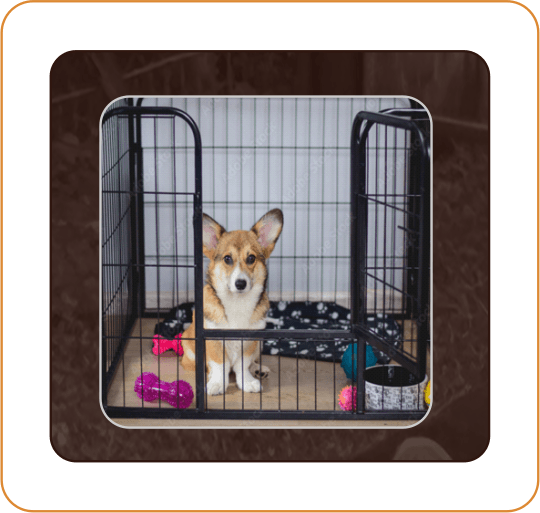
Dog pens didn’t work for us because my corgi kept climbing out of the top, but I know lots of other corgi owners who have had success with them.

 They provide your dog with a bit more space to move around in, while also keeping them within a certain area.
One great advantage of dog pens is that they are big enough to include a bed for your corgi to sleep or rest comfortably inside.
Additionally, dog pens can also be very useful for managing puppies (check out my corgi puppy checklist if you haven’t already!).
They offer a safe and secure space for your puppy to play and learn. And to assist with potty training, corgi parents will often place puppy pee pads on one side of the pen, while the dog bed is on the other.
This way, your puppy has a designated sleeping and potty area, which can make the training process easier.